





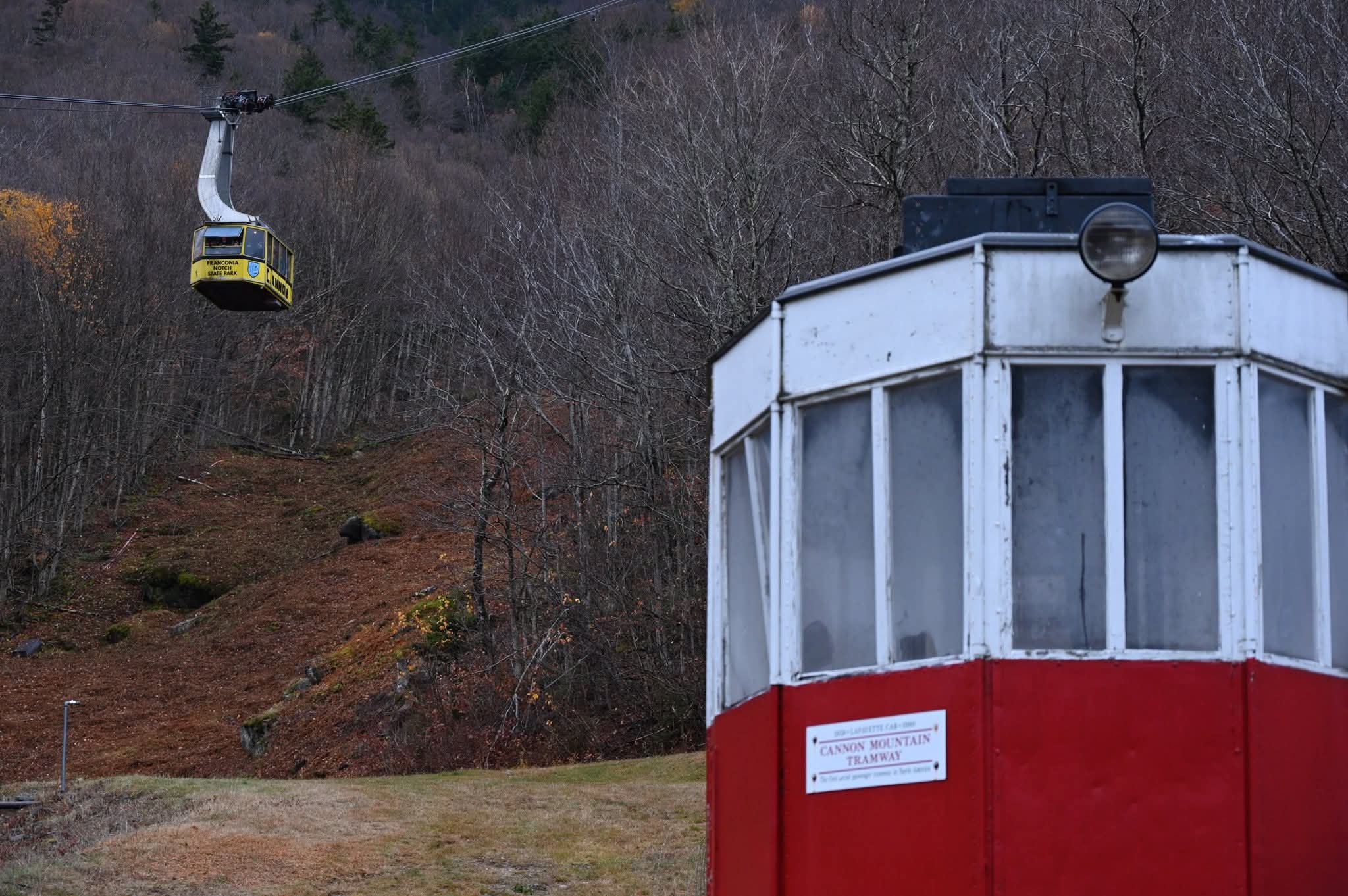
Littleton Chevrolet is so proud to support and partner with Cannon Mountain and its employees over the past 14 years that we thought with the retiring of the second-Generation Tramway, it would be appropriate to write a blog about its history and the impacts it has had in the North Country and beyond.
If you’ve ever visited the stunning Franconia Notch State Park in New Hampshire, you’ve likely experienced the iconic Cannon Mountain Aerial Tramway. Its significance runs deeper than a scenic ride; it is a profound piece of American history and an enduring pillar of the North Country’s economy and identity.
Chapter One: The Original Lift (1938)
In 1938, amid a time of limited recreational infrastructure, the opening of the Cannon Mountain Aerial Tramway was nothing short of revolutionary. It was officially the first passenger aerial tramway in North America, instantly putting New Hampshire on the map as an innovative destination.
This massive engineering feat required stringing enormous cables up the steep, granite face of Cannon Mountain, providing an unprecedented five-minute vertical ascent. The original cars carried passengers safely to the 4,080-foot summit, opening up the mountainside to mass tourism, scientific study, and pioneering skiing.
Chapter Two: The Second Generation (1980 – 2025)
After over four decades of service, the first generation of the tramway was retired. In 1980, the second-generation tramway was installed, featuring larger, more modern cabins and upgraded machinery. This new system continued the legacy of its predecessor for another 45 years, ensuring reliable, year-round access to the summit for millions of visitors.
This long-serving second generation recently completed its final run on October 26, 2025, marking the end of a remarkable era and paving the way for the future.
A Crucial Lift for the North Country: The Enduring Benefits
The Tramway’s operational history, through both the first and second generations, cemented its status as a vital economic engine for the remote towns and villages of northern New Hampshire.
1. Tourism and Commerce
By introducing a modern, accessible means of travel, the tramway instantly opened the region up to mass tourism. It drew visitors from across the Northeast and beyond, providing a reliable stream of revenue that supported local hotels, restaurants, and shops, proving particularly stabilizing during challenging economic times.
2. Accessibility and Recreation
For visitors of all ages, the benefits were immediate and transformative:
- Effortless Access: It allowed families, the elderly, and those with physical limitations to easily reach the alpine summit for unparalleled, world-class views of Franconia Notch and the Presidential Range.
- Year-Round Destination: The tramway secured Cannon’s reputation as a key summer attraction, offering observation decks and unique high-altitude hiking, while also supporting the state’s premier winter sports industry.
Chapter Three: The Next Ascent (The Third Generation)
The closure of the second-generation tramway is not an ending, but a pause before an exciting beginning. Over the next two years, the mountain will undergo a massive, multi-million-dollar modernization effort to install the third generation tramway.
This new system will feature cutting-edge technology, greater capacity, and enhanced safety and efficiency, ensuring that the legacy of accessibility and economic benefit continues. The third generation is projected to be operational in or around 2027, ready to welcome the next generation of mountain adventurers.
An Enduring Symbol
The Cannon Mountain Aerial Tramway—from its groundbreaking start in 1938 to the recent retirement of its second system—is more than just a lift; it is a symbol of regional pride and vision. As we look ahead to the launch of the third generation, we celebrate its enduring history and the promise of continued soaring adventures for the North Country and its visitors. Photo credit – Dave Oakman
Connect with us


- July 2026
- June 2026
- May 2026
- March 2026
- February 2026
- January 2026
- November 2025
- October 2025
- September 2025
- August 2025
- July 2025
- June 2025
- May 2025
- April 2025
- January 2025
- December 2024
- November 2024
- October 2024
- September 2024
- August 2024
- May 2024
- April 2024
- February 2024
- January 2024
- November 2023
- October 2023
- September 2023
- August 2023
- July 2023
- February 2023
- January 2023
- November 2022
- April 2022
- February 2022