





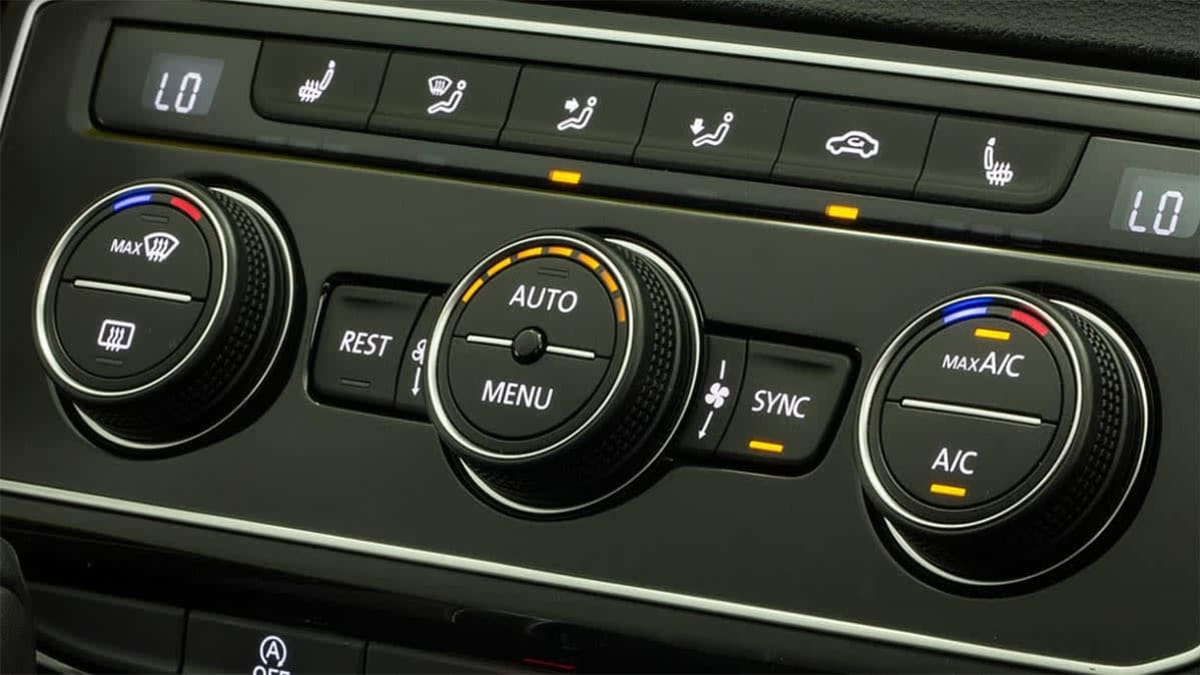
The temptation is real: it’s a scorching summer day, your car’s air conditioning is blowing lukewarm air and there it is on the auto parts store shelf—a quick-fix A/C recharge can promise cold air in ten minutes for $30.
While it looks like a cheap and easy DIY win, using those store-bought cans is one of the fastest ways to turn a minor, inexpensive A/C issue into a multi-thousand-dollar repair nightmare.
Here is why those “quick-fix” cans cause far more damage than they fix in the long run.
1. You are Blindly Guessing the Pressure
Your car’s A/C system doesn’t just need refrigerant; it needs an exact, precisely measured amount of it. Modern vehicles hold a remarkably small amount of refrigerant, often measured to the exact ounce.
The cheap plastic gauges on DIY cans only measure pressure on the low-pressure side of the system. They give you no reading on the high-pressure side. Without seeing both sides, you are essentially flying blind.
- The Overfill Disaster: If you add too much refrigerant, you can “hydro-lock” the A/C compressor. Because liquids cannot be compressed, an overfilled system will literally destroy the internal components of your compressor, causing it to fail instantly.
2. The Nightmare of “Leak Sealant”
Almost every DIY recharge can on the market contains a chemical leak sealant. The packaging advertises this as a feature (“Seals leaks fast!”), but inside your A/C system, it behaves like a ticking time bomb.
These sealants are designed to react with moisture and oxygen to form a hard scab over a leak. However, if there is any moisture inside your A/C lines (which is common if you have a leak), the sealant will activate inside the system. It quickly turns into a gummy, hardened sludge that clogs the expansion valve, ruins the drier, and completely destroys the compressor.
The Professional Toll: Once a system is contaminated with leak sealant, it often cannot be flushed. Mechanics will have to replace the entire A/C system—compressor, condenser, evaporator, and lines…which can easily cost $2,000 or more. Furthermore, many shops use expensive recovery machines that can be ruined by DIY sealants, meaning they may refuse to service your car if they detect it.
3. It Ignores the Real Problem: A Leak
Refrigerant does not get “used up” like engine oil or gas. It operates in a completely sealed loop. If your A/C is low on refrigerant, you have a leak.
Blasting more refrigerant into a leaking system from a store-bought can is like trying to fill a bucket with a hole in the bottom. The fresh refrigerant will just escape into the atmosphere. Worse yet, as refrigerant leaks out, air and moisture leak in. Moisture mixes with refrigerant to form a highly corrosive acid that eats away at your system from the inside out.
How the Pros Do It Differently
When you bring your vehicle to one of our Littleton Chevrolet Certified technicians, they don’t just guess with a single gauge. They use a professional Evacuate and Recharge (Evac & Recharge) machine to fix the root of the problem.
1.Recover & Measure:Step 1.
The technician hooks up high- and low-pressure lines to safely vacuum out whatever refrigerant is left in your system, measuring exactly how much was lost.
2.Deep Vacuum Test:Step 2.
The machine holds the system under a deep vacuum for 15 to 30 minutes. This boils off and eliminates any harmful moisture inside the lines while testing to see if the system can hold a vacuum (which checks for leaks).
3.Leak Detection:Step 3.
If a leak is suspected, they inject a specialized UV dye. Using a blacklight, they can pinpoint the exact O-ring, hose, or component that is leaking and replace it properly.
4.Precision Recharge:Step 4.
Finally, the machine injects the exact weight of fresh refrigerant and lubricating oil specified by your vehicle’s manufacturer.
Skip the Quick Fix, Save Your A/C
A DIY can is a high-stakes gamble with a low chance of success. If your car is blowing hot air this summer, skip the auto parts aisle. Let a certified technician diagnose the issue correctly, patch the real leak, and recharge your system safely. It will save you a massive headache and a massive repair bill down the road.
Give our service team a call at 603.444.1999 to evaluate your A/C system today.
Connect with us


- July 2026
- June 2026
- May 2026
- March 2026
- February 2026
- January 2026
- November 2025
- October 2025
- September 2025
- August 2025
- July 2025
- June 2025
- May 2025
- April 2025
- January 2025
- December 2024
- November 2024
- October 2024
- September 2024
- August 2024
- May 2024
- April 2024
- February 2024
- January 2024
- November 2023
- October 2023
- September 2023
- August 2023
- July 2023
- February 2023
- January 2023
- November 2022
- April 2022
- February 2022