




Blog

LITTLETON CHEVROLET BLOG - Your Vehicle Needs Boots, Not Sneakers: Why Winter Tires are a Must-Have. - October Special - Buy 3, get 1 for $1 on select tires* with installation.

Untitled design - 2025-10-04T122305.918

Your Vehicle Needs Boots, Not Sneakers: Why Winter Tires are a Must-Have

As the leaves fall and the air turns crisp, many drivers start thinking about swapping out their summer or all-season tires. But is it really necessary? The simple answer is a resounding yes. Winter tires (often called snow tires) are arguably the most critical safety feature you can add to your vehicle when the temperature consistently drops.

It's a common misconception that all-wheel drive (AWD) is enough to handle winter driving. While AWD helps you accelerate in snow, it does nothing to help you steer or stop. That's where the specialized engineering of a dedicated winter tire comes into play.

Why Your Regular Tires Fail in the Cold

Your all-season or summer tires are designed with a rubber compound that begins to stiffen and lose elasticity when the temperature consistently falls below 45 degrees Fahrenheit (7∘ Celsius). When the rubber hardens, it loses its ability to grip the road, which drastically increases your stopping distance and reduces your control—even on dry pavement.

The Science Behind Winter Tire Superiority

Winter tires are purpose-built to conquer cold weather, snow, ice, and slush. They outperform all-season tires in three key areas:

1. Specialized Rubber Compound

The most crucial difference is the rubber. Winter tires use a unique compound, often containing a higher percentage of natural rubber and silica, that is engineered to remain soft and pliable well below freezing temperatures. This flexibility ensures the tire maintains optimal contact and grip on the road surface, which is essential for safe driving.

2. Aggressive Tread Design

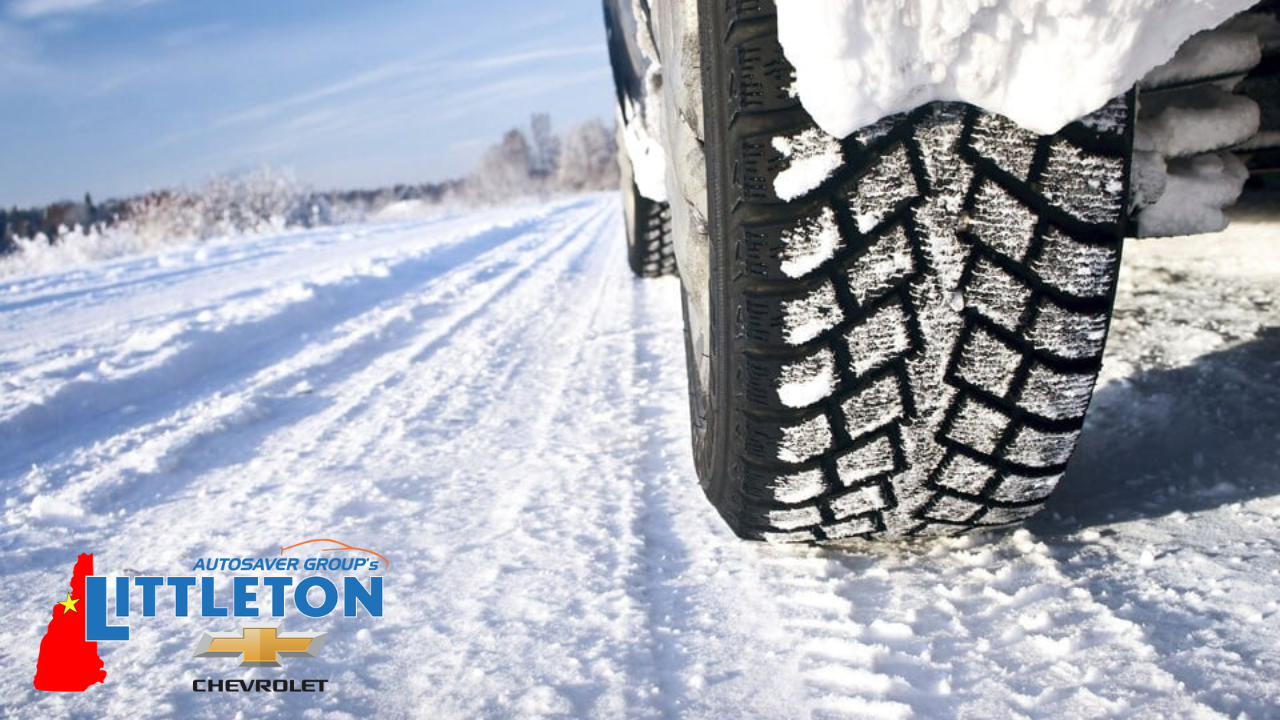
Take a look at a winter tire and you'll notice a dramatically different pattern.

  • Deeper Tread Depth: This helps channel snow, slush, and water away from the tire's contact patch, preventing buildup and maximizing grip.
  • Wider Grooves: Designed to "bite" into the snow and provide a sturdy platform for traction.
  • High-Density Siping: These are the thousands of tiny, razor-thin slits cut into the tread blocks. Sipes act as extra biting edges, gripping and interlocking with snow and ice on the road. Some advanced designs use 3D sipes that open up to grab snow and ice before closing to provide stability.

3. Shorter Braking Distances

This is the safety factor that could save you from an accident. On snow or ice, the difference in stopping power is staggering. A vehicle equipped with winter tires can stop significantly shorter than the exact same vehicle on all-season tires. That few extra feet of stopping distance is the difference between an emergency stop and a fender-bender.

Winter Tires vs. All-Season Tires vs. All-Weather Tires: What's the Difference?

Tire TypeBest ForRubber CompoundTread/SipesKey Takeaway
All-SeasonMild weather, year-round use in moderate climates (>45∘F)Designed for a long tread life; hardens in cold temperatures.Moderate tread depth and minimal sipes for light snow.A compromise tire that sacrifices extreme performance for versatility. Not ideal for heavy snow or ice.
Winter (Snow)Cold weather, snow, ice, and slush (Consistently <45∘F)Stays soft and flexible in extreme cold for maximum grip.Deep, aggressive grooves and high-density sipes (3PMSF symbol).Essential for regions with harsh, snowy winters. Provides superior traction, braking, and control.
All-WeatherYear-round use in areas with mild to moderate winters.Better cold-weather performance than All-Season, but not as soft as Winter tires.More aggressive tread and siping than All-Season; often carry the 3PMSF symbol.A good one-tire solution for drivers in light-snow regions who don't want to swap tires twice a year.

Export to Sheets

The Three-Peak Mountain Snowflake (3PMSF) Symbol: This symbol, found on the sidewall of a tire, certifies that the tire has met specific performance requirements in snow testing. Dedicated winter tires and most all-weather tires carry this symbol, while standard all-season tires do not.

The Verdict: Your Safety is Worth the Investment

While the upfront cost of buying a second set of tires might seem high, consider it an investment in your safety. Not only do winter tires protect you, but they also significantly reduce the wear on your primary set of tires, effectively extending their life.

If you live in a region where temperatures consistently drop below 45∘F (7∘C), and you regularly encounter snow or ice, equipping your vehicle with a dedicated set of winter tires is the smartest decision you can make for safe winter travel. Drive with confidence this season—put the right tires on your vehicle. Interested in having our Littleton Chevrolet Service Team price out some new tires for you? Give them a call at 603.444.1999 or www.littletonchevrolet.com
Recommended Posts

Pattenville Cemetery

The Lost Village Under the Lake: The Story of Pattenville, NH   

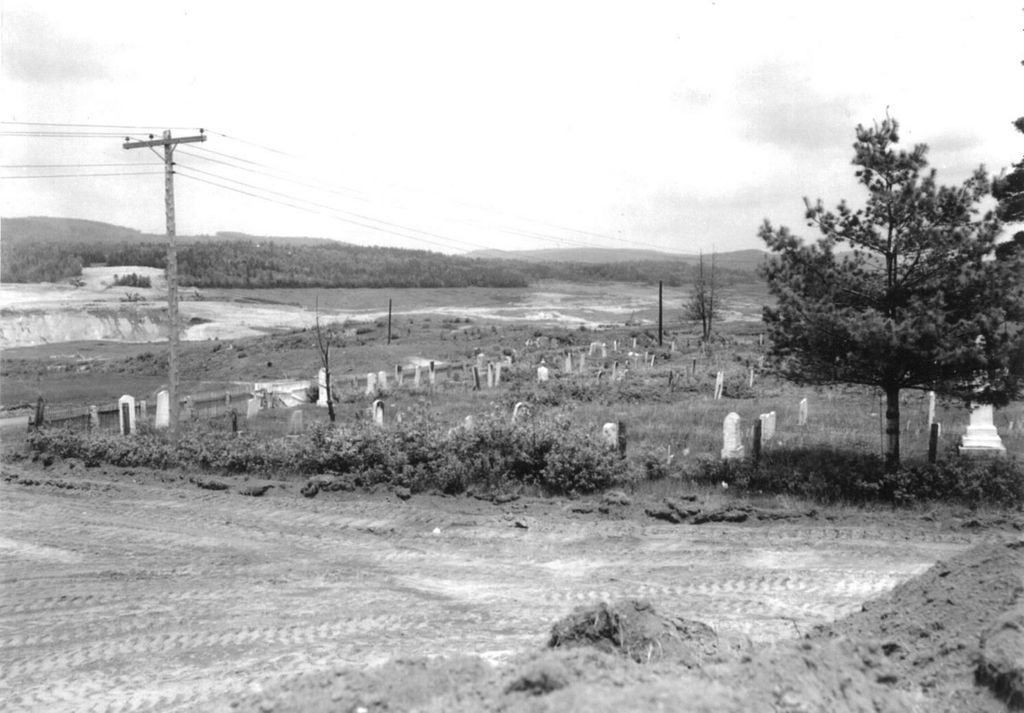
If you’ve ever launched a boat, dropped a fishing line or sat by the shoreline at the Pattenville Picnic Area along the Moore Reservoir in Littleton, New Hampshire, you’re looking out over one of the most serene bodies of water in the North Country. Stretched across nearly 3,500 acres between New Hampshire and Vermont, the reservoir looks like it has been part of the landscape forever. But beneath those calm, deep waters lies a hidden chapter of local history: the drowned village of Pattenville. Before the valley was inundated in the mid-1950s, Pattenville was a bustling small hamlet situated along the banks of the Connecticut River on the Littleton side, across from Upper Waterford, Vermont. It was a classic New England river town...home to farmsteads, family homes, tree-lined roads, and vibrant local lives. Generations of residents farmed the fertile floodplain soil, crossed the river via local bridges and built their lives around the natural rhythm of the North Country. However, as post-World War II New England rapidly expanded, demand for electric power skyrocketed.  The powerful, rushing waters of the Connecticut River were seen as the ultimate source for clean, renewable energy and the valley surrounding Pattenville was identified as the ideal location for a massive hydroelectric station. In the early 1950s, construction officially began on the Samuel C. Moore Dam. The engineering project was colossal...designed to build a 178-foot-high, nearly 3,000-foot-long barrier to harness the river's flow, creating the largest conventional hydroelectric facility in New England. Building a reservoir of that scale required sacrifice.  Thousands of acres of land needed to be cleared to hold back over 200,000 acre-feet of water. For the people of Pattenville (and neighboring Upper Waterford), the impending dam meant saying goodbye to their hometown forever. Before the gates closed and the basin was filled, an enormous effort took place to dismantle the village piece by piece: **Homes & Structures: Buildings were auctioned off, moved inland to higher ground or completely demolished **Infrastructure: Roads...including portions of Route 18...were realigned or slated to be submerged. **Resting Places: Centuries-old local cemeteries were carefully exhumed by hand, and loved ones were relocated to surrounding towns like Littleton and St. Johnsbury to ensure their graves would not be lost under the rising tide. By 1956, the dam was completed, and the waters began to rise. Slow-moving floodwaters swept over the old foundations, roads, and fields, permanently erasing Pattenville from the map and giving birth to the Moore Reservoir. Today, the Moore Reservoir is celebrated as an outdoor paradise. Known for its vast, pristine stretches of undeveloped shoreline, it offers incredible opportunities for boating, kayaking and fishing for northern pike, bass, and trout. Yet, for those who know where to look, hints of the past remain: Submerged Stone Walls: On clear days or during seasonal water drawdowns, sharp-eyed boaters can still spot old stone farm walls disappearing straight into the depths...silent markers of ancient property lines. The Pattenville Name: While the village itself is gone, its legacy lives on at the Pattenville Picnic Area, keeping the town's memory alive for visitors who pause to admire the sunset over the water. Pattenville stands as a powerful reminder of the delicate balance between progress and history. Though its streets now lie quietly 60 to 120 feet below the surface, the story of the community that gave way to power the North Country remains an indelible part of New Hampshire’s heritage.

Artist Bluff

Why Artist’s Bluff is the Ultimate Fall Foliage Destination on Earth

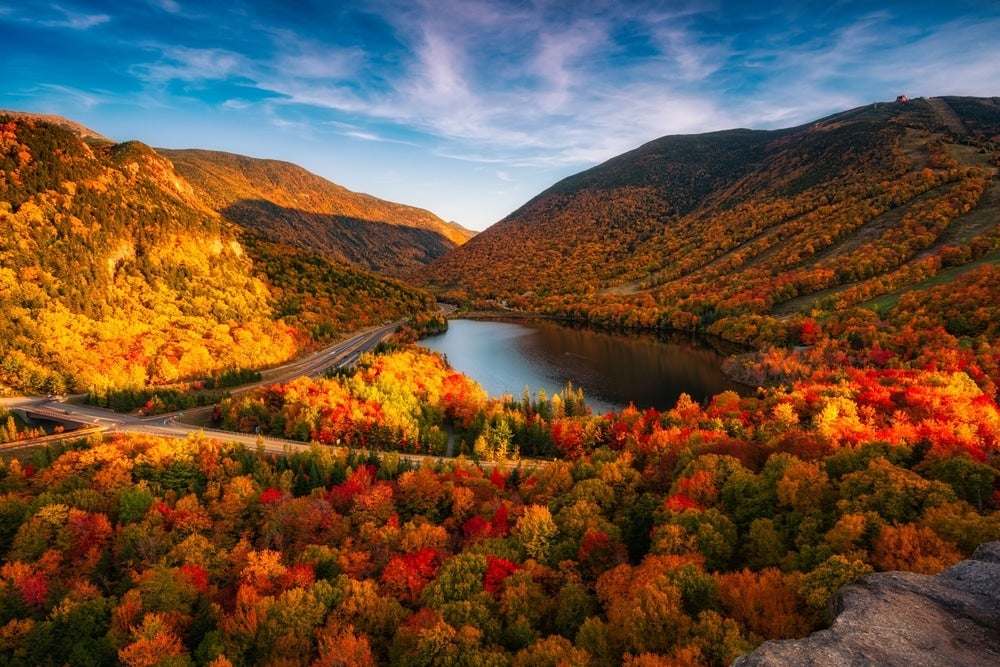
Every autumn, leaf-peepers and photographers from around the globe make a pilgrimage to the White Mountains of New Hampshire.  While the region boasts dozens of breathtaking peaks and scenic drives, one spot consistently steals the show: Artist’s Bluff. Perched at the northern edge of Franconia Notch State Park, this rocky outcrop offers what many consider the single most iconic, postcard-perfect view of New England’s fall foliage but why has this modest 1.5-mile loop transformed into a world-famous destination for autumn photography? Autumn over Echo Lake at Artist's Bluff. Source: Sugar Hill Inn 1. The Composition is a Photographer’s Dream Nature painted Artist’s Bluff with effortless balance.  Standing on the granite ledge, your lens frames a layered masterpiece: In the foreground: A carpet of fire-red sugar maples, brilliant yellow birches, and deep orange oaks tumbling down the mountainside. In the mid-ground: The glassy, dark waters of Echo Lake, perfectly mirroring the surrounding canopy and catching the light of sunrise or sunset. In the background: The towering, dramatic slopes of Cannon Mountain and the sweeping curves of the Franconia Notch pass, sweeping upward to meet the autumn sky. Whether you shoot with a professional DSLR, a drone, or a smartphone, the natural symmetry of the Notch creates depth and scale that standard landscape views simply can't match. 2. Maximum Reward for Minimal Effort Many of the world's most dramatic mountain vistas require grueling, day-long treks.  Artist’s Bluff is different. The short, 1.5-mile loop trail gains roughly 400 feet of elevation...making it accessible to hikers of all skill levels, families, and photographers hauling heavy camera gear. Within 20 to 30 minutes of stepping off the trailhead near Route 18, you’re sitting on open granite, looking out over thousands of acres of peak fall color.  That high-payoff accessibility makes it a magnet for travelers capturing early morning light without needing a midnight alpine start. 3. Unmatched Density of Color New England’s unique mix of northern hardwoods creates a fiery palette rarely seen in other parts of the world. Because Franconia Notch serves as a natural funnel, the microclimate triggers early, vibrant color changes across a tight valley.  Standing atop the Bluff puts you right in the middle of a continuous, high-density sea of reds, golds, and ambers extending as far as the eye can see. Tips for Capturing the Perfect Photo Golden Hour Magic: Aim for early morning as the sun clears the ridge. Dawn light softens the contrast, paints the mountain slopes in warm tones, and often brings calm, mirror-like reflections to Echo Lake. Beat the Crowds: Given its popularity, arriving at sunrise or visiting on a weekday ensures a quieter experience and smoother parking along Echo Lake Beach or the trailhead lot. Composition Trick: Position a subject on the rocky ledge in foreground warm-toned jacket or sweater to give your photos a sense of human scale against the vast mountain backdrop. Artist’s Bluff isn't just another scenic overlook...it is the quintessential New England fall experience wrapped into a brief hike.  For anyone dreaming of autumn in full color, standing on those granite rocks above Echo Lake belongs right at the top of the bucket list.

Makayla Perkins

Littleton Chevrolet's Big Teacher Giveaway - Makayla Perkins 

--- Littleton Chevrolet's Teacher Giveaway Spotlight: Celebrating Dedication, Connection and Passion in Her Classrooms! -- At Littleton Chevrolet, our commitment to supporting our local region goes far beyond the walls of our dealership. We believe in lifting up the incredible individuals who dedicate their lives to strengthening our communities and few people do that work with as much heart, energy and love as our local educators. Today, we are honored to feature another amazing winner of our Littleton Chevrolet Teacher Giveaway: Makayla Perkins, a dedicated 2nd Grade Teacher at Lyndon Town School! Makayla’s journey in education began at Springfield College, where she earned her degree in Early Childhood Development and Education in 2016. She got her start in the classroom as an assistant Pre-K teacher at Burke Town School...a valuable foundation that allowed her to learn, grow and refine her vision for her career. In 2017, she brought her talents to Lyndon Town School as a Pre-K teacher before stepping up to the challenge of teaching 2nd grade. Safe to say, she has found her true groove! When we sat down with Makayla, her genuine passion for her students shone through every word. For her, teaching is so much more than a job; it’s an opportunity to shape lives and build meaningful, lasting bonds. "Being a teacher is amazing. I am here to shape my students...those connections and relationships with the kids are so rewarding," Makayla shared. "There are so many times when they come to me and talk and connect on a deeper level...I LOVE IT! I also love the academics of learning...When a student figures out and solves a problem or question, that makes me feel great. The work I have put in is all worth it. I know they are starting to love to learn." That dedication to finding what clicks for every single child was clear when she shared a breakthrough moment from this year. She had been working hard to connect with a student who was hesitant to engage with lessons. Knowing he loved motorcycles and dirt bikes, Makayla got creative: she pressed letter patterns into Play-Doh and challenged him to trace the letters using toy Matchbox dirt bikes. It was an instant "WOW moment." Seeing the spark in his eyes as he made the connection reminded her exactly why creative, hands-on teaching matters so much. Of course, teaching also comes with real challenges. Makayla spoke candidly about helping students catch up on foundational skills, as well as managing the everyday behavioral interruptions that can take away from valuable instructional time but her commitment never wavers: "It is hard and I feel so bad but we will not give up on them. We will continue to brainstorm how we can overcome these challenges." To support her creative classroom setup, Makayla plans to use her $250 Amazon Gift Card from Littleton Chevrolet to stock up on building blocks, connectors, creative learning tools and...of course...a few more Matchbox vehicles! Makayla, thank you for your incredible patience, warmth and relentless dedication to your students at Lyndon Town School. We are so proud to celebrate you and support the work you do every single day. Wishing you a spectacular, inspiring school year ahead! #LittletonChevrolet #TeacherGiveaway #LyndonTownSchool #SupportOurTeachers #CommunityFirst #LittletonNH #EducatorsWhoInspire #Gratitude Vermont Public Northeast Kingdom Roots See less