Blog

What did the General Motors; Geo Line Up look like in 1992?

9lQdOdQ2-8k86JabEFM-(edit)

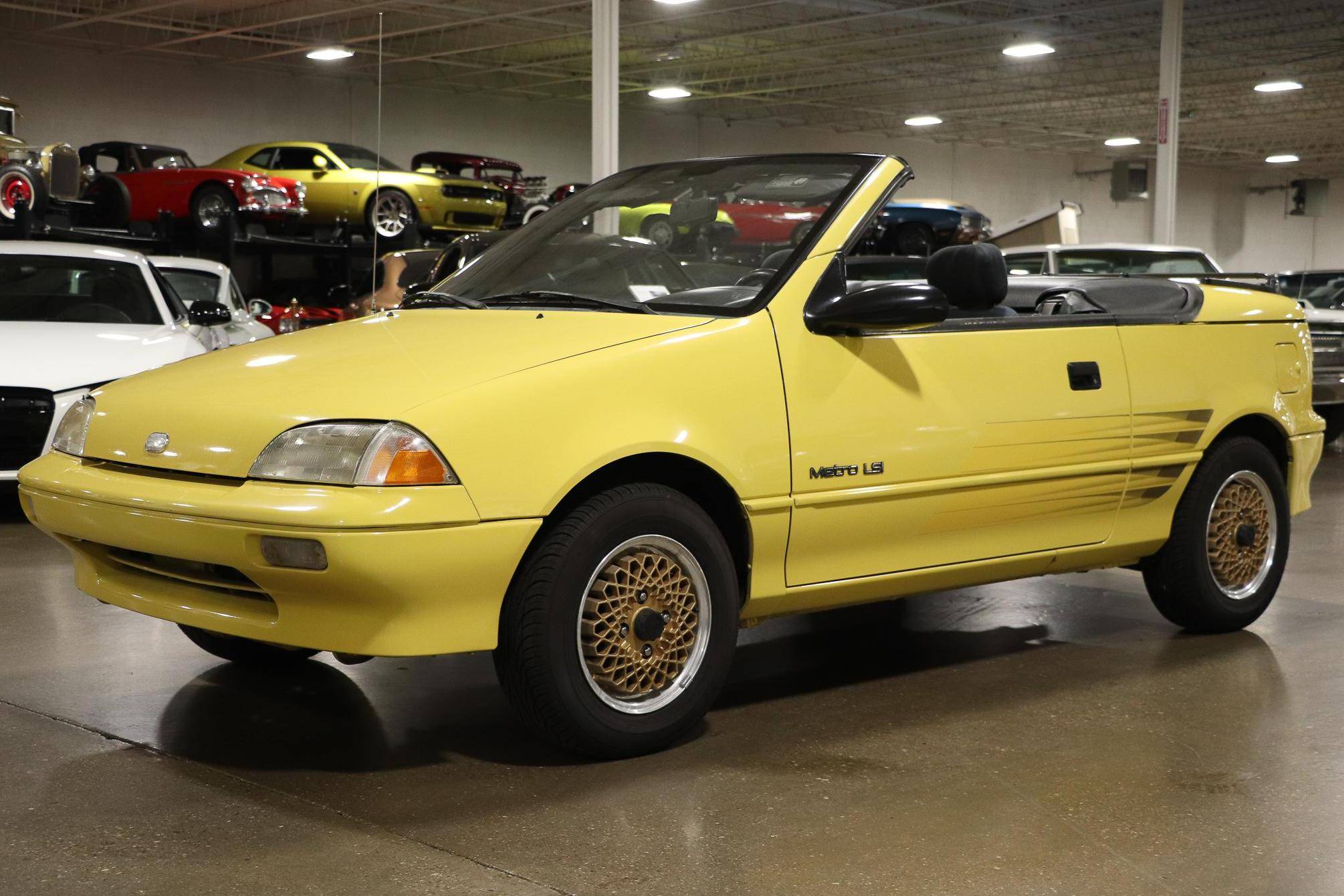
Here at Littleton Chevrolet, 1992 was a landmark year—it's when we first opened our doors! As we were getting started, a unique brand was making its mark on the automotive world: Geo and we sold a ton of them.

Ever wonder what the Geo lineup was all about? Geo was a sub-brand of Chevrolet, introduced by General Motors to compete with the growing popularity of small, affordable, and fuel-efficient imported cars. The idea was to combine the trusted Chevrolet dealer network with vehicles built in partnership with Japanese automakers like Suzuki, Toyota, and Isuzu.

For its customers, the Geo lineup offered a new kind of vehicle with a focus on reliability and value. In 1992, the lineup included the famously fuel-efficient Geo Metro, the versatile Geo Prizm (a rebadged Toyota Corolla), the sporty Geo Storm, and the rugged little Geo Tracker SUV. These cars provided a great option for people looking for a dependable and economical ride.

The Geo brand was a fascinating experiment that lasted for about a decade, from 1989 until it was absorbed back into the Chevrolet brand after the 1997 model year. Though the Geo nameplate disappeared, many of the models, like the Metro, Prizm, and Tracker, lived on for a few more years as Chevrolets.

Recommended Posts

ASG-Ally-Window-Cling

Littleton Chevrolet Blog -

Littleton Chevrolet Blog - Drive with Unmatched Confidence: Discover Our New 6-Month/6,000-Mile Bumper-to-Bumper Certified Pre-Owned Program When it comes to purchasing a pre-owned vehicle, peace of mind isn't just a bonus...it’s everything. At Littleton Chevrolet we believe that choosing a used car, truck, or SUV should never feel like a gamble. That’s why we are thrilled to announce our upgraded Certified Pre-Owned (CPO) Program, now featuring an incredible 6-Month / 6,000-Mile Bumper-to-Bumper Warranty on all vehicles regardless of Make or Model. This enhanced program is designed to deliver absolute transparency, reliability, and protection, setting a new standard for used vehicle buyers in our community. What Makes Bumper-to-Bumper Coverage Different? Many standard pre-owned warranties only cover major powertrain components like the engine and transmission. While powertrain protection is important, today’s vehicles are filled with complex electronics, convenience features, and advanced mechanical systems. Our 6-Month / 6,000-Mile Bumper-to-Bumper Warranty goes well beyond basic protection. It covers virtually every major electrical and mechanical component on the vehicle...from air conditioning and steering to high-tech infotainment and safety hardware. If something unexpected comes up, you're covered. Key Customer Benefits We built this CPO program around the real-world needs of drivers across New Hampshire and Vermont: Complete Financial Protection: Modern auto repairs can be costly. Our bumper-to-bumper coverage shields your wallet from surprise expenses during your first six months or 6,000 miles of ownership. Rigorous Multi-Point Inspection: Before a vehicle earns the Autosaver Group / Littleton Chevrolet CPO badge, it must pass a comprehensive multi-point inspection performed by our certified factory technicians. We inspect, service, and recondition components so you can drive away worry-free. Total Driving Confidence: Taking the keys to your new vehicle should be exciting, not nerve-wracking. Knowing that your vehicle has been thoroughly vetted and backed by strong warranty coverage allows you to enjoy every mile with total peace of mind. Local, Trustworthy Service: Should you ever need assistance, our dedicated service department right here at Littleton Chevrolet is ready to take care of you quickly and hassle-free. Drive with Confidence Warranty Features & Benefits Available on gasoline, diesel, electric, and hybrid vehicles $0 deductible Nationwide coverage with access to thousands of licensed repair facilities across the U.S. and Canada 24/7 roadside assistance, trip interruption¹², and alternate transportation Upgrade option to Major Guard/Major Guard EV coverage, including a $0 or $250 disappearing deductible option. Added Benefits That Go Further Roadside Assistance (24/7 in the U.S. & Canada) Flat tire changes Towing Battery jump-starts Out-of-gas fuel delivery Locksmith/Key service² Trip Interruption Reimbursement up to $150 per day (up to $750 maximum) for meals and lodging if a covered breakdown occurs more than 100 miles from home and requires overnight repairs.¹² Alternate Transportation Coverage to help with rental vehicles, rideshare, or public transportation if repairs take two or more labor hours or require an overnight stay (limitations apply). Our Commitment to You At Littleton Chevrolet, supporting our local community with honest, high-quality automotive solutions is at the heart of what we do. Vehicles play an essential role in daily life...whether you're commuting to work, picking up the kids or taking scenic weekend drives through the White Mountains. By offering a true 6-Month / 6,000-Mile Bumper-to-Bumper Warranty on our Certified Pre-Owned inventory, we are delivering on our promise: putting our customers first and standing behind every vehicle we sell. Ready to upgrade your ride? Visit Littleton Chevrolet today to explore our CPO inventory and take a test drive with absolute confidence! Click here to view all pre-owned vehicles... https://www.littletonchevrolet.com/searchused.aspx

CR-Cars-InlineHero-Volkswagen-Atlas-AC-7-20

Littleton Chevrolet's Blog Post - Why you should never you a can of Air Conditioning repair or recharge and the damage it can cause?

The temptation is real: it’s a scorching summer day, your car’s air conditioning is blowing lukewarm air and there it is on the auto parts store shelf—a quick-fix A/C recharge can promise cold air in ten minutes for $30. While it looks like a cheap and easy DIY win, using those store-bought cans is one of the fastest ways to turn a minor, inexpensive A/C issue into a multi-thousand-dollar repair nightmare. Here is why those "quick-fix" cans cause far more damage than they fix in the long run. 1. You are Blindly Guessing the Pressure Your car’s A/C system doesn't just need refrigerant; it needs an exact, precisely measured amount of it. Modern vehicles hold a remarkably small amount of refrigerant, often measured to the exact ounce. The cheap plastic gauges on DIY cans only measure pressure on the low-pressure side of the system. They give you no reading on the high-pressure side. Without seeing both sides, you are essentially flying blind. The Overfill Disaster: If you add too much refrigerant, you can "hydro-lock" the A/C compressor. Because liquids cannot be compressed, an overfilled system will literally destroy the internal components of your compressor, causing it to fail instantly. 2. The Nightmare of "Leak Sealant" Almost every DIY recharge can on the market contains a chemical leak sealant. The packaging advertises this as a feature ("Seals leaks fast!"), but inside your A/C system, it behaves like a ticking time bomb. These sealants are designed to react with moisture and oxygen to form a hard scab over a leak. However, if there is any moisture inside your A/C lines (which is common if you have a leak), the sealant will activate inside the system. It quickly turns into a gummy, hardened sludge that clogs the expansion valve, ruins the drier, and completely destroys the compressor. The Professional Toll: Once a system is contaminated with leak sealant, it often cannot be flushed. Mechanics will have to replace the entire A/C system—compressor, condenser, evaporator, and lines...which can easily cost $2,000 or more. Furthermore, many shops use expensive recovery machines that can be ruined by DIY sealants, meaning they may refuse to service your car if they detect it. 3. It Ignores the Real Problem: A Leak Refrigerant does not get "used up" like engine oil or gas. It operates in a completely sealed loop. If your A/C is low on refrigerant, you have a leak. Blasting more refrigerant into a leaking system from a store-bought can is like trying to fill a bucket with a hole in the bottom. The fresh refrigerant will just escape into the atmosphere. Worse yet, as refrigerant leaks out, air and moisture leak in. Moisture mixes with refrigerant to form a highly corrosive acid that eats away at your system from the inside out. How the Pros Do It Differently When you bring your vehicle to one of our Littleton Chevrolet Certified technicians, they don't just guess with a single gauge. They use a professional Evacuate and Recharge (Evac & Recharge) machine to fix the root of the problem. 1.Recover & Measure: Step 1. The technician hooks up high- and low-pressure lines to safely vacuum out whatever refrigerant is left in your system, measuring exactly how much was lost. 2.Deep Vacuum Test: Step 2. The machine holds the system under a deep vacuum for 15 to 30 minutes. This boils off and eliminates any harmful moisture inside the lines while testing to see if the system can hold a vacuum (which checks for leaks). 3.Leak Detection: Step 3. If a leak is suspected, they inject a specialized UV dye. Using a blacklight, they can pinpoint the exact O-ring, hose, or component that is leaking and replace it properly. 4.Precision Recharge: Step 4. Finally, the machine injects the exact weight of fresh refrigerant and lubricating oil specified by your vehicle's manufacturer. Skip the Quick Fix, Save Your A/C A DIY can is a high-stakes gamble with a low chance of success. If your car is blowing hot air this summer, skip the auto parts aisle. Let a certified technician diagnose the issue correctly, patch the real leak, and recharge your system safely. It will save you a massive headache and a massive repair bill down the road. Give our service team a call at 603.444.1999 to evaluate your A/C system today.

MY27_Chevrolet_Silverado_Work-Truck

Littleton Chevrolet's Blog - Next-Gen Truck Wars: The Redesigned 2027 Chevrolet Silverado 1500 Is Here

It has been eight long years since Chevrolet completely overhauled its bread-and-butter pickup, but the wait is officially over. Chevrolet has pulled the wraps off the highly anticipated, next-generation 2027 Chevrolet Silverado 1500. Rather than playing it safe with a minor mid-cycle facelift, Chevy went back to the drawing board to build what they are calling the most powerful and technologically advanced Silverado ever. With a completely revamped design language, a massive screen layout inside, and two brand-new V8 engines under the hood, the 2027 model looks ready to make its cross-town rivals scramble. Here is everything you need to know about Chevrolet's all-new half-ton truck. Exterior: A Modern, Chiseled Presence The outgoing fourth-generation Silverado had a highly extroverted design that split opinion. For 2027, Chevrolet has introduced a more traditionally handsome, confident, and premium look. The redesigned 2027 Chevrolet Silverado 1500. Source: Kelley Blue Book The truck features a wider, more planted stance highlighted by pronounced wheel-opening moldings and more aggressive body lines. Up front, you will notice a "high-brow" lighting setup where thin LED daytime running lights run sleekly right under the hood seam, while the primary headlamps sit lower on the revised front fascia. At the back, there is a giant, three-foot-wide third brake light built onto the cab, standard dual exhausts on the Custom trim and above, and a much cleaner, more discreet sliding rear window. The truck maintains its extreme versatility, continuing to offer three cab styles (Regular, Quad, Crew) and three bed lengths (Short, Standard, Long). Inside the Cabin: A Massive Digital Cockpit If you thought the old interior felt a bit dated on lower-tier trucks, you are in luck. Chevy is no longer locking the best technology behind expensive trim levels. Every single 2027 Silverado —from the Work Truck up to the High Country—now comes standard with the exact same edge-to-edge dashboard layout. The stunning digital command center pairs a 12.2-inch digital driver instrument cluster with a massive, class-leading 16.3-inch central touchscreen featuring wireless Apple CarPlay and Android Auto. Premium and Off-Road Interior Touches: The Passenger Screen: Step up to the High Country or ZR2 trims, and Chevy includes an 11.5-inch front passenger touchscreen that is angled so it remains invisible to the driver to prevent distraction. Chevrolet Newsroom High Country Luxury: The top-tier luxury model ditches the old-school western theme for a clean, ultra-modern American luxury vibe, complete with real wood decor, microfiber suede accents, and the first-ever panoramic sunroof offered on a Silverado. Autoblog ZR2 Attitude: The hardcore off-roader gets Torch Red accents along the seatbelts and seats, plus GM's first-ever implementation of forged carbon-fiber interior trim. Multi-Flex Center Console: A brand-new console design offers nearly 25 liters of storage and folds completely flat to create a sturdy, desktop-like workspace on the fly. Chevrolet Under the Hood: Return of the Small-Block V8 While competitors are heavily leaning into twin-turbo V6 setups or hybrid power, Chevy is doubling down on its 70-year heritage of legendary V8 power. The old 5.3-liter and 6.2-liter V8 engines have been retired. In their place arrive two brand-new, sixth-generation naturally aspirated V8 engines built from the ground up: 5.7-liter V8: Replacing the old 5.3L, this reimagined small-block is expected to output roughly 400 horsepower. Autoblog 6.6-liter V8: Replacing the 6.2L, this monster engine is claimed by Chevy to be the most powerful naturally aspirated V8 in its class (expected to land around 475 horsepower). Autoblog But traditional V8s aren't the only options. Chevy updated its entire four-engine lineup: Engine Options Transmission Key Highlight 2.7L TurboMax 4-Cylinder 10-Speed Automatic Upgraded from the old 8-speed; has the most standard torque in its class. 3.0L Duramax Turbo-Diesel 10-Speed Automatic Returns as the only straight-six diesel option in the half-ton segment. Next-Gen 5.7L Small-Block V8 10-Speed Automatic Ground-up redesign; estimated 10% reduction in greenhouse gas emissions. Next-Gen 6.6L Small-Block V8 10-Speed Automatic Built for maximum towing performance and heavy-duty capability. Capability, Safety, and Off-Roading Chevy has reworked the chassis with revised dampers and reduced friction points to give the truck a smoother unladen ride. If you are buying a 4WD model, the famous Z71 off-road suspension package now comes completely standard. For serious off-roaders, Chevy expanded its lifted truck lineup to three distinct trims: the Custom Trail Boss, the Trail Boss (which gets a 2-inch factory lift and 34-inch mud-terrain tires), and the ultra-capable ZR2. The 2027 ZR2 rolls out with 35-inch mud-terrain tires, front and rear electronic locking differentials, and desert-proven Multimatic DSSV dampers. An AEV-enhanced ZR2 Bison Edition is also available, bringing heavy-duty steel bumpers, rock rails, and comprehensive underbody skid plates. On the tech side, GM’s highly praised Super Cruise returns. It remains the only driver-assistance system on the market that allows for completely hands-free driving while towing a trailer, mapping across hundreds of thousands of miles of North American highways. Trim Lineup and Availability Chevy simplified the structure into a new seven-trim lineup, notably replacing the classic "LT" trim moniker with a standalone "Silverado" trim. The 2027 Chevrolet Silverado 1500 is scheduled to hit dealership showrooms in late 2026/early 2027. While official power figures and final pricing are expected to be announced closer to the launch date, base pricing is estimated to start around $39,000 for a bare-bones Work Truck, stretching past $80,000 for a fully loaded High Country or ZR2 Bison. Want to learn more?? Give our sales staff a call at 603.444.1999, stop by or check us out on the web at www.littletonchevrolet.com.